
The Benefits of Electric Heat in Simulation Test Chambers
Across industries ranging from aerospace and automotive to electronics, coatings, and advanced materials, simulation test chambers play a critical role in product development and validation. These chambers are designed to replicate years of environmental exposure — including heat, UV radiation, humidity, and thermal cycling — in a matter of days or weeks. At the heart of many of these accelerated life testing systems is one key requirement: precise, repeatable heat. Without tightly controlled thermal conditions, test results can become inconsistent or unreliable, undermining the entire validation process.
Traditionally, some manufacturers have relied on gas-fired heating systems to generate the required temperatures inside test chambers. However, as testing environments become more sophisticated and controlled, electric heat is rapidly emerging as the preferred solution — offering superior precision, safety, and integration flexibility.
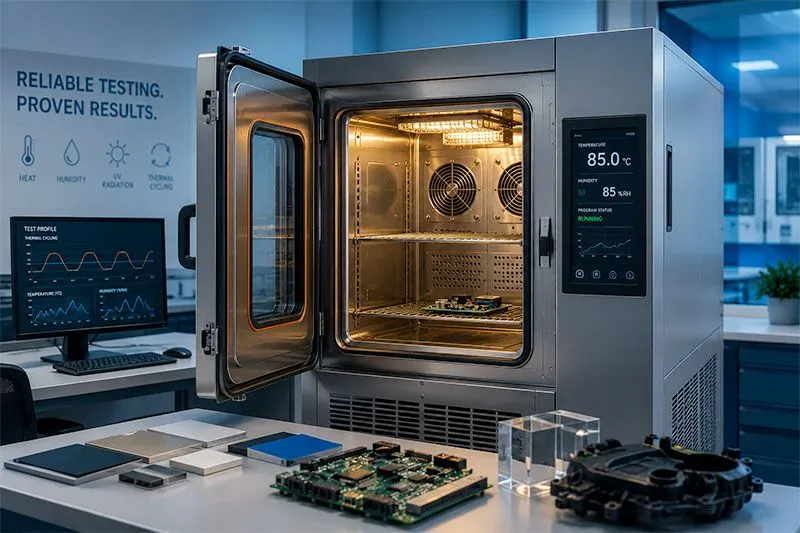
The Challenge of Heating Simulation Chambers
Simulation test chambers are engineered to recreate complex environmental conditions with high accuracy. Whether testing the effects of prolonged sun exposure, extreme heat, or cyclic temperature changes, these systems must maintain stable and uniform thermal profiles. One manufacturer of environmental simulation chambers initially used tabletop gas heaters to generate the required heat. While effective in producing high temperatures, this approach introduced several challenges:
- Limited accessibility to gas infrastructure in laboratory environments
- Safety concerns related to combustion and open flame
- Potential contamination from combustion byproducts
- Difficulty achieving precise and repeatable temperature control
In modern lab and R&D settings — where cleanliness, safety, and precision are paramount — these limitations made gas heating an impractical long-term solution.
Electric Heat: A Natural Fit for Lab Environments
Unlike gas systems, electric heat integrates seamlessly into laboratory and testing environments. Virtually every facility has access to electrical power, eliminating the need for specialized gas lines or fuel storage.
More importantly, electric heaters provide clean, combustion-free heat, ensuring that test conditions are not influenced by unwanted gases or particulates. This is especially critical in applications involving sensitive materials, coatings, electronics, or optical components, where even minor contamination can skew results.
By transitioning to electric heat, simulation chamber manufacturers can create a more controlled, repeatable, and laboratory-friendly testing environment.
Customizing Proven Technology for a Specialized Application
To solve this challenge, TUTCO Farnam leveraged its existing Heat Torch™ platform — a versatile inline air heating solution — and adapted it to meet the specific needs of the simulation chamber.
Rather than requiring a complete redesign of the chamber, the customized Heat Torch heater was engineered to integrate directly into the existing system. This approach allowed the customer to maintain the majority of their original design while upgrading to a more precise and reliable heating solution.
By carefully evaluating the application — including airflow requirements, chamber size, temperature targets, and control parameters — TUTCO Farnam was able to deliver a tailored electric heating solution that met all performance objectives.
Precision Temperature Control for Accurate Testing
One of the most significant advantages of electric heat in simulation chambers is the ability to achieve precise and repeatable temperature control. Electric heaters respond quickly to control inputs, allowing for tight regulation of chamber conditions. When paired with advanced control systems, these heaters enable:
- Accurate temperature setpoints
- Rapid ramp-up and cooldown cycles
- Consistent thermal profiles across test cycles
- Programmable testing sequences for automated operation
This level of control is essential for accelerated life testing, where even small temperature deviations can impact the validity of long-term simulation results.
Rapid Thermal Response for Accelerated Testing
Simulation chambers are designed to compress years of environmental exposure into a much shorter timeframe. To achieve this, they must be capable of rapidly reaching and maintaining elevated temperatures.
TUTCO Farnam’s electric heaters, including customized Heat Torch™ solutions, are engineered for fast thermal response. Their low thermal mass and efficient heat transfer allow chambers to reach target temperatures quickly, reducing test cycle times and improving throughput.
This responsiveness also supports dynamic testing scenarios, such as thermal cycling, where temperatures must change rapidly and repeatedly without overshoot or lag.
Cleaner Operation for Sensitive Applications
In many simulation environments, maintaining a clean testing atmosphere is just as important as achieving the correct temperature. Gas-fired systems can introduce combustion byproducts that may interfere with sensitive materials or skew test results.
Electric heat eliminates this concern entirely. With no combustion process, electric heaters provide clean, dry heat that preserves the integrity of the test environment. This makes them ideal for applications involving:
- Coatings and surface treatments
- Plastics and polymers
- Electronic components
- Aerospace and automotive materials
- UV and weathering simulations
By ensuring a contamination-free environment, electric heat helps deliver more accurate and reliable test outcomes.
Enhanced Safety and Simplified Installation
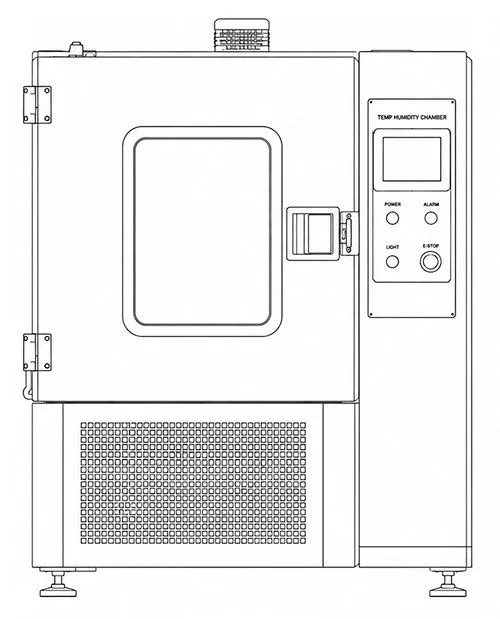
Laboratory safety standards are becoming increasingly stringent, and electric heat aligns well with these requirements. By eliminating open flames and fuel sources, electric heaters reduce fire risk and simplify compliance with safety regulations. Installation is also significantly easier. Without the need for gas lines, ventilation systems, or combustion controls, electric heaters can be integrated quickly into new or existing chamber designs. This reduces installation costs, shortens development timelines, and makes it easier to scale production.
Flexible, Scalable Heating Solutions
TUTCO Farnam offers a wide range of electric heating technologies that can be adapted for simulation chamber applications. From compact inline heaters like Heat Torch™ to fully custom-engineered solutions, these systems can be tailored to meet specific performance requirements. This flexibility allows manufacturers to design chambers for a variety of testing scenarios — from small benchtop units to large industrial-scale systems — while maintaining consistent heating performance across platforms.
Why TUTCO Farnam for Simulation Test Chambers?
With decades of experience in process air heating and custom thermal solutions, TUTCO Farnam brings deep application knowledge to the design of electric heating systems for testing environments. Our approach focuses on:
Understanding the unique
requirements of each application
Adapting proven heater platforms for specialized use cases
Delivering precise, repeatable thermal performance
Ensuring long-term reliability in demanding environments
By partnering closely with equipment manufacturers, we help develop solutions that enhance performance without requiring unnecessary system redesigns.
Advancing Testing Accuracy with Electric Heat
As simulation testing becomes more sophisticated, the need for precise, reliable, and clean heat sources continues to grow. Electric heating technology offers a clear advantage over traditional gas systems, providing the control, safety, and consistency required for modern test chambers. By customizing its Heat Torch™ platform for simulation applications, TUTCO Farnam has demonstrated how electric heat can be seamlessly integrated into existing designs while delivering significant performance improvements.
 Electrification Cures Safety Woes of Webbing Manufacturer
 Farnam delivered a customized electric heater system that replaced a hazardous process with a safer and efficient custom solution.
Get info RV Comfort Takes to the Open Road with Electrification
 Farnam designed a custom compact electric heater for RV Comfort Systems to make heating cleaner and efficient—solutions for any project.
Get info The Power of Electrification in String Coating Process
 Farnam electrified the string coating process for a cleaner, safer, and more efficient system that paid for itself in just four weeks.
Get info Coffee Roasters Savor the Benefits of Electrification
 Using our Flow Torch™ heaters, which are highly efficient and ideal for heating large airflows, we were able to electrify this large coffee roasting process.
Get info Hot Tub Manufacturers Can Relax with Electric Heat
 With a custom open-coil heater, Tutco Farnam helped hot tubs manufacturers maintain temperature and reduce wear on primary heaters.
Get info The Benefits of Electric Heat in Simulation Test Chambers
 TUTCO Farnam customized a Heat Torch™ to replace gas heaters in simulation /test chambers, delivering safe, efficient electric heat.
Get info Electricity Delivers Value for Pizza Ovens
 TUTCO Farnam designs duct and Flow Torch™ heaters to deliver high-temp air quickly for efficient, safe, and precise electric pizza ovens.
Get info Pellet Stoves can Benefit from Electric Heat
 TUTCO SureHeat has developed customized electric ignitors to meet the unique needs of this application using our patented Serpentine technology.
Get info Electrification is a Sweet Solution for Chocolate Industry
 Chocolate tempering stations using TUTCO heating solutions are more efficient and can now be found all across the country.
Get info Anti-Idling Laws Drive Tractor Trailers to Electric Heat
 TUTCO has the capabilities to design and manufacture custom open coil heating solutions to meet the trucking industry’s demands.
Get info Wood Stove Industry Warms Up to Electric Heat
 TUTCO has worked with several customers to incorporate an ultra-efficient open coil electric heater add-on to their stoves.
Get info The Electrification of Environmental Test Chambers
 For companies transitioning from gas to electric heat in their environmental test chambers, TUTCO is here to provide comprehensive assistance and support.
Get info The Market for Electric Heat Solutions is Red Hot
 Tutco heaters are used in manufacturing processes, where molten metal is poured into molds to fabricate various products.
Get info Electric Heaters Used in Thermal Oxidizers
 TUTCO Farnam provides advanced electric heating solutions for thermal oxidizers used in industrial air pollution control. Designed to destroy volatile organic compounds (VOCs) and hazardous air pollutants (HAPs), thermal oxidizers rely on precise temperature, residence time, and turbulence to achieve high destruction efficiency.
Get info TUTCO Heaters for Environmental Cleanup Applications
 TUTCO Farnam heating solutions have become indispensable tools for environmental companies addressing challenges posed by pollutants in diverse mediums.
Get info Heaters for Energy Storage Applications
 TUTCO Farnam heating solutions have become indispensable tools for companies addressing energy storage through a range of emerging technologies.
Get info EV Market Plugs Into TUTCO Heating Solutions
 TUTCO Heating Solutions Group is a pivotal contributor, offering advanced electric heat solutions across a broad range of applications.
Get info