
Proper Use of Thermocouples with TUTCO Process Air Heaters
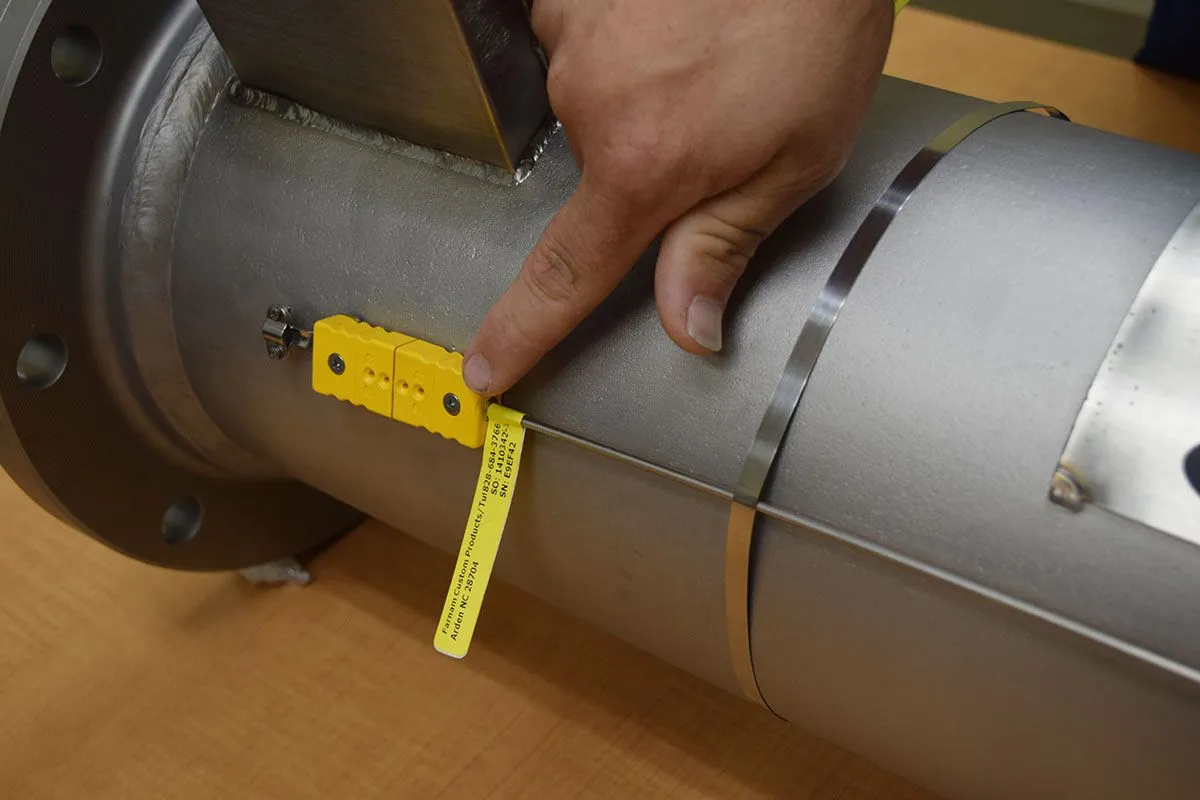 Achieving precise and consistent process temperatures with your TUTCO electric air heater depends in large part on the correct placement and use of a thermocouple. While it would be ideal to enter your set point temperature and expect the system to reach and maintain it, improper thermocouple placement can lead to element overheating before the control system even registers the target temperature. This can shorten the life of your heater and result in unreliable performance.
TUTCO heating elements are designed to respond quickly. When electricity is applied, the elements heat up fast when air flows—this is a great advantage when managed correctly. However, if control is not properly configured, this speed can result in the elements overshooting, especially when the airflow volume is not adequate. It's important to remember that the temperature of the process is not the same as the temperature of the heating elements themself. Accurate, stable control requires a responsive control system that can make small, frequent adjustments to the voltage. Done properly, this allows the heater to maintain a very precise temperature—typically within plus or minus two degrees.
The key to this level of control is the thermocouple. For TUTCO process air heaters, a Type “K” thermocouple is recommended. They offer fast response times and high accuracy, making them ideal for managing rapid changes in heater output. For best results, the thermocouple should be placed approximately one inch downstream from the heater’s air exit. Placing it too far away from the heater can result in delayed response and inaccurate readings due to heat loss through the system. This can lead to poor control and potential overheating of the heating element.
To extend heater life and maintain precise temperature control, several best practices should be followed. Never power on the heater without first confirming that air is flowing. Airflow is essential to proper heater function and protects the elements from damage. Keep the heater as close as possible to where you need it to avoid heat loss. Locate the thermocouple near the heater outlet, where airflow is strong and temperatures are closest to the process heat. When increasing temperature, do so in controlled steps or use a programmed ramp rate. By increasing temperature in steps, it allows piping and tooling downstream in the system to heat up and avoid heat loss. Insulating parts of the system that are exposed to ambient conditions can also help minimize heat loss and improve system efficiency. Additionally, make sure that your control systems and sensors are
If you need help setting up your heater, TUTCO offers a range of resources to support your process. Quickstart guides, operating manuals, and performance curves are available for download on our websites. For more specific questions or application support, our team is here to help. With proper setup and thermocouple placement, your TUTCO heater can deliver the performance and reliability your process demands.
 Electrification & Decarbonization Solutions | Farnam-Custom
 The Importance of Thermocouples
 Process Air Heaters
 Thermodynamics and Heat Transfer