
A Better Approach to Wide Plastic Seals
Successful thermal design often depends on selecting the right heating technology
In manufacturing, the obvious solution isn't always the right one. That was the case when a packaging equipment manufacturer approached TUTCO Farnam with a unique sealing challenge. The company was producing equipment that created a side seal between two layers of plastic film. While this type of process commonly relies on cartridge heaters, their application required something different. Instead of the narrow seal typically found on packaging equipment, they needed to produce a seal approximately one inch wide across a sealing bar nearly 30 inches long. Achieving that wider, perfectly consistent seal proved to be more difficult than expected.
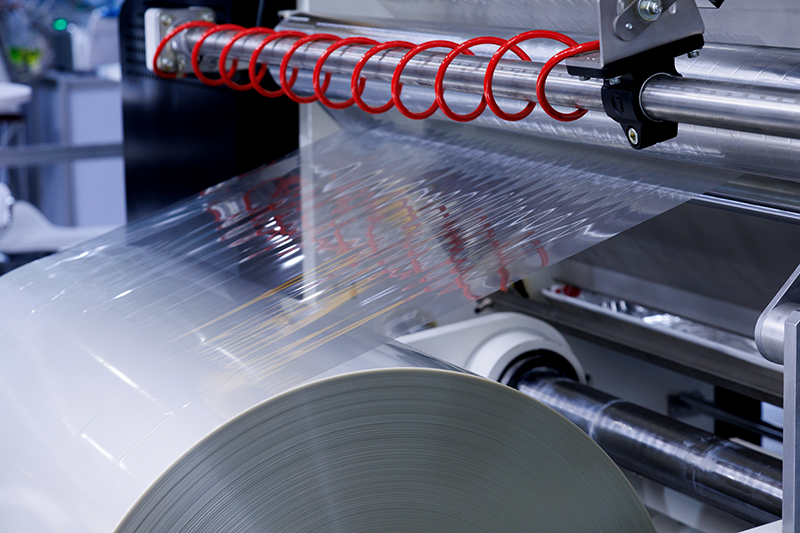 The customer's first approach followed a familiar path. They installed a cartridge heater inside a wider metal sealing bar, hoping the additional metal would spread the heat evenly across the entire sealing surface. While the concept seemed sound, the results were disappointing. The center of the sealing bar became significantly hotter than the outer edges because the heat was still concentrated around the cartridge heater itself. As the heat traveled outward through the metal, temperature dropped off, making it difficult to achieve a uniform seal across the full one-inch width. To make matters worse, the larger mass of metal dramatically increased the amount of time required for the machine to reach operating temperature. Operators were left waiting while the sealing bar slowly absorbed enough heat to begin production.
Rather than trying to improve the existing design, the engineering team at TUTCO Farnam stepped back and looked at the problem from a different perspective. Instead of asking how to spread heat from a single source, they focused on creating a heating element that matched the size and shape of the sealing surface itself. The solution was a custom mica surface heater measuring approximately 30 inches long by one inch wide. Rather than being buried inside a large block of metal, the heater was sandwiched between two machined metal plates and mechanically fastened into place, allowing heat to be generated evenly across the entire sealing area.
The difference was immediately noticeable. Because the heating element extended across the full width of the seal, the temperature remained remarkably consistent from edge to edge. The customer was able to produce the uniform one-inch seal they had originally envisioned without the hot spots and cooler edges that had plagued the cartridge heater design. Equally important, the new heater dramatically reduced warm-up time. By generating heat directly across the sealing surface instead of relying on a large piece of metal to distribute it, the machine reached operating temperature in less than half the time required by the original design. Faster startups meant less waiting for operators and improved overall production efficiency.
One of the biggest takeaways from this project is that successful thermal design often depends on selecting the right heating technology rather than simply increasing heater size or power. Cartridge heaters remain an outstanding solution for countless applications, particularly when concentrated internal heating is required. However, applications that demand broad, uniform surface temperatures sometimes benefit from an entirely different approach. In this case, the custom mica surface heater delivered exactly what the customer needed because it applied heat where it mattered most—directly across the entire sealing surface.
Projects like this illustrate why many OEM manufacturers involve TUTCO Farnam early in the design process. Every application presents its own combination of thermal requirements, space limitations, production goals, and performance expectations. By understanding those requirements first instead of immediately recommending a product, our engineering team can often identify solutions that improve performance while reducing cycle times and increasing process consistency.
Sometimes the best engineering solution isn't creating more heat. It's delivering the right amount of heat in exactly the right place. In this packaging application, that simple change in thinking transformed an inconsistent sealing process into one that produced cleaner seals, faster startups, and more reliable performance with a custom heater designed specifically for the job.
 Flow Torch Process Air Heaters
 Flow Torch™ heaters deliver efficient, reliable air heating for large airflow applications with scalable size options.
Get info Custom Surface Heater for Heat Press
 Custom surface heater for heat press. Longer lasting, lower cost alternative to the existing heating element. Contact us with your unique heating needs.
Get info Shrink Wrapping Heat System
 Complete thermal system for product packaging. An air heater & blower shrink wrap product for shipping. Contact us with your unique heating needs.
Get info Heat Torch Process Air Heaters
 Farnam Heat Torch™ high pressure inline air heaters deliver tailored precision for heating compressed air or any non-combustible gas.
Get info Inline Industrial Duct Heaters
 Our rugged, efficient, open coil Duct Heaters offer the capability to heat large volumes of air with fast warm-ups and cool-downs.
Get info Resin Dryers and Process Heaters
 Resin dryers and process heaters are crucial for ensuring high-quality plastics. Learn more in this article.
Get info Heat Staking Heaters
 Heat staking is a method of permanent joint assembly involving heat and compression to deform a protruding plastic stud.
Get info Air Heaters and Dryers for Flexographic and Gravure Printing
 Electric air heaters are used in interstation and final stage dryers to expedite the evaporation of ink solvents and water.
Get info