
A Better Fit for High-Temperature Test Chambers
Solving a High-Temperature Challenge with the Right Heating Solution
One of the advantages of custom electric heating is that there isn't one heater that's right for every application. Every heater technology has strengths, and the best solution is usually the one that's designed for the temperatures, environment, and performance the application requires. One TUTCO Farnam customer discovered this while building a series of high-temperature environmental test chambers.
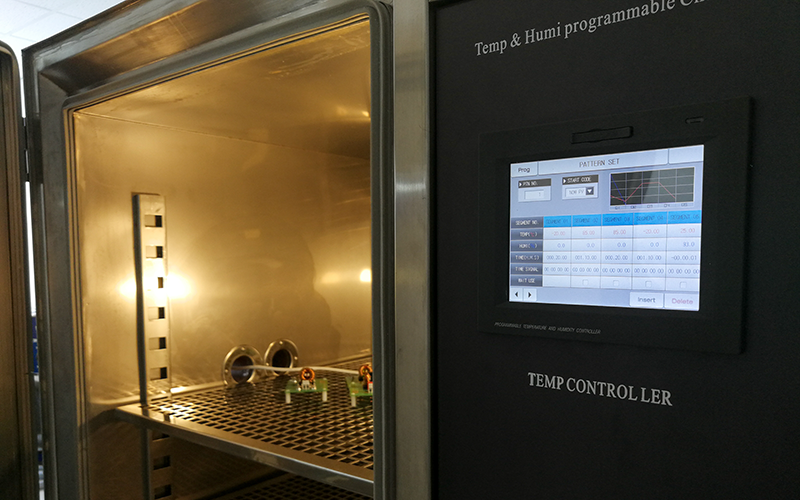 The company had standardized on our silicone rubber heaters for several different pieces of equipment and had been very happy with their performance. Silicone rubber heaters are thin, flexible, easy to install, and provide excellent, even heat. They're a great choice for many OEM applications and were working well throughout most of the customer's product line. The environmental test chambers were the exception.
To simplify manufacturing, the customer continued using silicone rubber heaters in the chambers even though they regularly operated above the heater's recommended maximum temperature of 428°F (220°C).
There's nothing mysterious about what happens when silicone rubber gets too hot. It starts to break down. First it smokes. Keep pushing it, and eventually the silicone begins to char and burn. The heaters weren't failing because they were poorly made—they were simply being used in an application they weren't designed for.
When the customer contacted TUTCO Farnam, they weren't looking to replace silicone rubber heaters across their entire product line. In fact, they wanted to keep using them because they had proven to be reliable in every other application. They simply needed a heater that could handle the higher temperatures inside the environmental chambers.
Rather than trying to make the existing heater work, our engineers recommended changing heater technologies. A custom mica surface heater was a much better fit for the application. Mica surface heaters are designed to operate at temperatures up to 1,000°F (538°C), and they heat up very quickly. Just as important, we were able to design the new heater with nearly the same footprint as the silicone rubber heater it replaced. That meant the customer could make the change without redesigning the chamber or making significant modifications to the equipment.
The new heaters solved the problem. The environmental chambers now had a heating solution designed for the temperatures they were actually running, while the rest of the customer's equipment continued using silicone rubber heaters where they were the right choice. The conversion required only minor design changes and gave the customer a much more reliable long-term solution.
Projects like this are a good reminder that successful thermal design isn't about finding the "best" heater. It's about selecting the right heater for the job. Silicone rubber heaters are excellent products within their intended operating range. Mica surface heaters are a better choice when the application demands higher temperatures. Knowing where one technology ends and another begins can improve reliability, extend heater life, and eliminate problems before they become expensive.
That's how TUTCO Farnam approaches every project. We start by understanding the application—not by recommending a particular product. Sometimes the right answer is the heater you're already using. Other times, a different heater technology is all that's needed to improve performance. In this case, changing from a silicone rubber heater to a custom mica surface heater gave the customer a solution that fit the application without changing the overall design of their equipment.
 Electrification Cures Safety Woes of Webbing Manufacturer
 Farnam delivered a customized electric heater system that replaced a hazardous process with a safer and efficient custom solution.
Get info RV Comfort Takes to the Open Road with Electrification
 Farnam designed a custom compact electric heater for RV Comfort Systems to make heating cleaner and efficient—solutions for any project.
Get info The Power of Electrification in String Coating Process
 Farnam electrified the string coating process for a cleaner, safer, and more efficient system that paid for itself in just four weeks.
Get info Coffee Roasters Savor the Benefits of Electrification
 Using our Flow Torch™ heaters, which are highly efficient and ideal for heating large airflows, we were able to electrify this large coffee roasting process.
Get info Hot Tub Manufacturers Can Relax with Electric Heat
 With a custom open-coil heater, Tutco Farnam helped hot tubs manufacturers maintain temperature and reduce wear on primary heaters.
Get info The Benefits of Electric Heat in Simulation Test Chambers
 TUTCO Farnam customized a Heat Torch™ to replace gas heaters in simulation /test chambers, delivering safe, efficient electric heat.
Get info Electricity Delivers Value for Pizza Ovens
 TUTCO Farnam designs duct and Flow Torch™ heaters to deliver high-temp air quickly for efficient, safe, and precise electric pizza ovens.
Get info Pellet Stoves can Benefit from Electric Heat
 TUTCO SureHeat has developed customized electric ignitors to meet the unique needs of this application using our patented Serpentine technology.
Get info Electrification is a Sweet Solution for Chocolate Industry
 Chocolate tempering stations using TUTCO heating solutions are more efficient and can now be found all across the country.
Get info Anti-Idling Laws Drive Tractor Trailers to Electric Heat
 TUTCO has the capabilities to design and manufacture custom open coil heating solutions to meet the trucking industry’s demands.
Get info Wood Stove Industry Warms Up to Electric Heat
 TUTCO has worked with several customers to incorporate an ultra-efficient open coil electric heater add-on to their stoves.
Get info The Electrification of Environmental Test Chambers
 For companies transitioning from gas to electric heat in their environmental test chambers, TUTCO is here to provide comprehensive assistance and support.
Get info The Market for Electric Heat Solutions is Red Hot
 Tutco heaters are used in manufacturing processes, where molten metal is poured into molds to fabricate various products.
Get info Electric Heaters Used in Thermal Oxidizers
 TUTCO Farnam provides advanced electric heating solutions for thermal oxidizers used in industrial air pollution control. Designed to destroy volatile organic compounds (VOCs) and hazardous air pollutants (HAPs), thermal oxidizers rely on precise temperature, residence time, and turbulence to achieve high destruction efficiency.
Get info TUTCO Heaters for Environmental Cleanup Applications
 TUTCO Farnam heating solutions have become indispensable tools for environmental companies addressing challenges posed by pollutants in diverse mediums.
Get info Heaters for Energy Storage Applications
 TUTCO Farnam heating solutions have become indispensable tools for companies addressing energy storage through a range of emerging technologies.
Get info EV Market Plugs Into TUTCO Heating Solutions
 TUTCO Heating Solutions Group is a pivotal contributor, offering advanced electric heat solutions across a broad range of applications.
Get info