
by Tim O'Shea
Biology and medical labs increasingly demand compact, precise, and clean heating solutions. From bench-top drying and reagent warmers to sample-prep ovens, forced-air temperature control is essential for repeatability and confidence in various laboratory settings. Crossflow (a.k.a. transverse) blower heaters are small heaters designed to mount directly to the exhaust of a crossflow blower and provide a powerful electric alternative to gas-fired systems. This page explains how labs and device OEMs are using them, why many are moving away from gas, and why TUTCO-Farnam’s crossflow blower heaters stand out among competitors.
An Overview of Crossflow Units and Why Labs Love Them
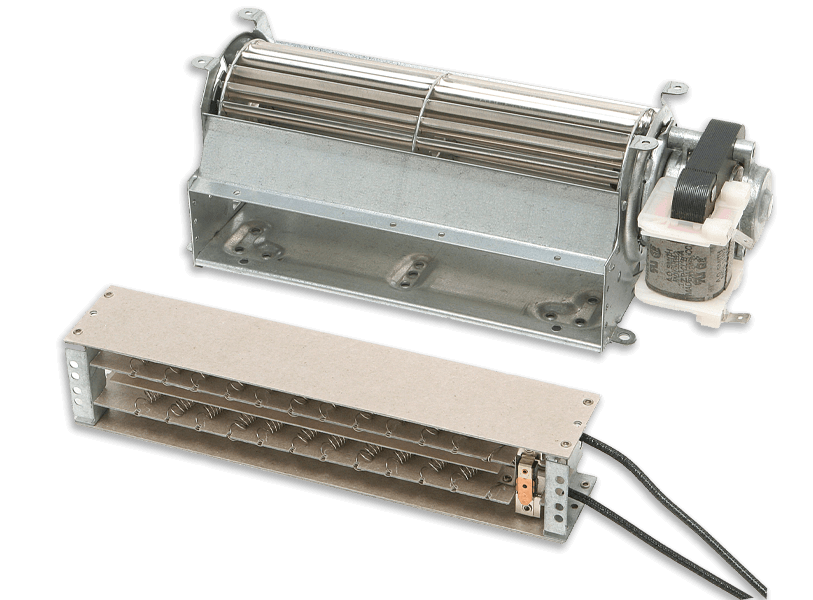 A crossflow blower heater is a compact heater assembly sized to attach to the outlet of a slim, low-profile blower. The blower provides uniform, directed airflow while the heater raises air temperature with rapid response and tight control. This combo delivers fast recovery times and even temperature distribution in small chambers, cartridge warmers, or instrument air-paths. This results in low footprint, low vibration, and predictable thermal profiles. TUTCO-Farnam offers standard lengths and custom configurations that match common blower sizes and OEM housing constraints, plus integrated over-temperature protection for safer medical use.
Making the Switch from Gas to Electric Heating
Many labs historically used gas-fired reheat or indirect gas heaters for larger HVAC/room heating and some process tasks. But for instrument-level and benchtop applications, electric crossflow heaters deliver several decisive benefits.
Cleaner Air & Lower Contamination Risks
Electric heaters require no combustion, so they eliminate combustion byproducts and minimize particle generation, which is critical for sample integrity and ISO clean areas.
Faster, More Precise Control
Electric resistance heaters respond almost instantly and pair well with PID control for tight ±0.1 - 1°C regulation, improving process repeatability for assays and drying cycles.
Smaller Footprint and Simpler Integration
Crossflow heater + blower assemblies mount directly to instrument panels or ducts, reducing piping, venting, and regulatory complexity associated with gas.
Improved Lab Safety
No fuel lines, no open flames, and easier compliance with medical-device electrical safety standards. Additionally, redundant thermal fuses and hi-limits are commonly available.
Operational Flexibility & Lifecycle Cost
Where utility prices and local infrastructure favor electricity, electric heaters simplify maintenance and eliminate fuel procurement logistics. Industry comparisons and vendor guidance highlight these pros as drivers for electric adoption in lab-scale applications.

WHY FARNAM STANDS OUT
TUTCO-Farnam is uniquely positioned for lab and medical-device use for a few concrete reasons.
Purpose-Built Crossflow Design
Farnam markets crossflow blower heaters specifically engineered to mount directly to crossflow blowers, which is a detail that reduces integration effort and keeps flow paths compact for small equipment. Many larger heater vendors provide duct heaters or unit heaters but generally do not integrate as simply as Farnam.
Medical & Laboratory Experience
TUTCO Farnam documents applications in blood analyzers, oxygen/ventilation warming, cryogen defrost, and other medical uses, showing both product fit and regulatory awareness. Farnam’s industry track record matters when a heater becomes part of a regulated instrument.
Customization at Scale
TUTCO Farnam publishes a wide range of lengths (5", 7", 10", 12", 15") and offers single/dual-wattage and voltage options, integrated thermal fuses, and hi-limit thermostats. These are features that OEMs commonly request when building compact lab instruments. Their engineering support and history of custom heater designs reduce the prototype-to-production friction that many medical-device teams face.
Safety and Component Recognition
TUTCO Farnam’s crossflow heaters are UL-recognized components and are supplied with standard over-temperature protections, allowing for increased device safety and component selection for regulated products.
Common Applications in Biology & Medical Labs
Benchtop Sample Dryers/Evaporators
Faster, uniform drydown of small volumes.
Blood-Analyzer Thermal Modules
Gentle, controlled warming of reagents or samples.
Cryogen Defrost & Sensor Warming
Prevent condensation/frost on critical components.
Internal Instrument Warmers
Reagent cartridges, tubing, or patient-facing devices.
Real Improvements Reported by Labs and OEMs Alike
When instrument makers and facilities replace or design out gas-heated elements in favor of electric crossflow solutions, measurable improvements emerge.
Faster Process Cycles
Forced hot-air dries and conditions humidity faster than natural convection, increasing throughput for sample dryers and preconditioning steps.
Lower Total Maintenance & Compliance Burdens
Removing gas reduces required inspections, leak-checks, and combustion-safety certifications. Additionally, simpler PM reduced consumable costs are reported with electric heating.
Energy and System-Level Gains
When Optimized Studies on integrated heating/dehumidification strategies show that smart electric heating, when combined with system redesign, can yield large HVAC energy savings versus conventional reheat approaches. This directly demonstrates the potential for significant system-level improvements when electric heaters are used thoughtfully.
How to Evaluate a Crossflow Heater Supplier: A Practical Checklist
When selecting a supplier for biology and medical lab use, prioritize:
Air Cleanliness & Materials: Choose heaters with enclosed surfaces or tube-over designs that won’t shed or outgas into the airstream.
Control Capability: Confirm compatibility with PID controllers and sensor types used in the instrument.
Safety Features: Integrated thermal fuses, hi-limit switches, and clear UL/CE documentation reduce certification issues.
Customization & Lead Time: Small instruments often require non-standard lengths, watt density tuning, or low-profile mounts, so it is important to verify engineering support.
Validation Support: Ask for performance data, thermal maps, and test reports to help with IQ/OQ/PQ where needed. Farnam publicly highlights lab and medical project experience, which can accelerate qualification.
Next Steps for R&D or Procurement Teams
- 1. Define the airstream: required flow, target ΔT, max ambient, and allowable particle limits.
- 2. Request a Farnam crossflow blower heater datasheet and thermal map for your blower geometry. Farnam’s crossflow product line and lab-solution pages are a good starting point.
- 3. Ask vendors for validation deliverables (thermal profiling, leak/particulate data) and UL/component certificates to speed regulatory review.
- 4. Consider a controlled bench trial comparing current gas-based steps to an electric crossflow prototype. Measure cycle time, energy, and sample outcome.
 Crossflow Blower Heaters and Air Curtains
 Crossflow Blower Heater: Uniform Wide-Air Heating
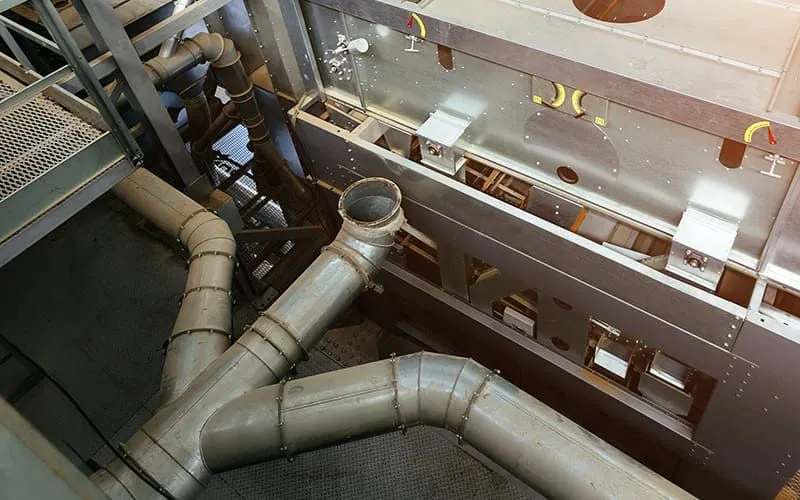 Industrial Dryers and Crossflow Blower Heaters
 Axial Fan Heaters | Precision Heat & Airflow – Farnam